Starting Again Without Starting Over
Teaching Art and Returning to the Fundamentals That Matter
Jeff
12/29/20253 min read
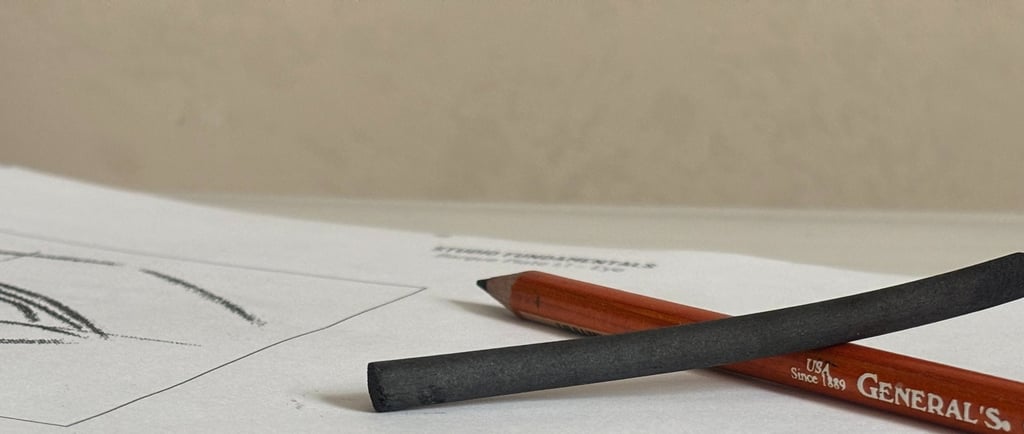
After nearly two decades teaching art, I realized my old approach wasn’t helping students really learn to draw. This post reflects on returning to the fundamentals, adopting an atelier-inspired approach, and what I learned about teaching, drawing, and my own artistic practice along the way.
Teaching Art Across a Lifetime
I’ve helped a lot of people begin their art journey. As an educator for nearly two decades, I’ve worked with the "littles" for a number of years. I’ve also taught their big brothers and sisters, cousins and uncles—probably for the longest stretch in my career. I’ve even taught children of former students.
This multi-layered experience of other peoples' lives and teaching them about how art can be a thread they weave from youth to old age has become a pressing concern for me. If you're in arts education at any level, you may have felt that way too.
The Grind Never Really Changes
Here’s the hot take about primary, middle, and secondary schools: regardless of the age you teach, the grind around day-to-day teaching never really goes away.
Each year means:
Starting over with a new group of kids and another group that has grown physically, emotionally, and psychologically
Grading anywhere from 480 students at the elementary level or closer to 200 at the secondary level
Managing parent communication and expectations
Attending professional development around “new” educational theories meant to improve your classroom experience (often with little relevance to your art program)
Dealing with administration at multiple levels, all with fingers in your pie
“I’m Just Not Good at Drawing”
Across ages, backgrounds, and skill levels, one belief shows up consistently: I’m not good at drawing. Many students are convinced they never will be. Growth mindset talks aside (we’ll get there), this belief runs deep.
So you try to meet students where they are. You create projects that touch on skills and do it sequentially—all with the hope that something sticks. You learn how to support a wide range of personalities, motivations, and anxieties. All within the constraints of curriculum, time, and institutional pressure. But I learned that came with a cost both for my students and for me.
The way I was teaching wasn’t helping students really learn to draw. It wasn’t getting to the root of the problems I saw, and it echoed my own frustrations with my high school and college art courses. That realization pushed me to ditch the projects and return to fundamentals using a more atelier-like approach that I learned about during my curriculum re-write research.
When Teaching Shapes Your Own Practice
What I didn’t expect, after all these years, was how much this would affect my own artistic practice.
After years of classroom teaching and creative work, my personal painting practice didn’t disappear—but it was seriously sidelined. When I finally returned to the easel, I felt something familiar and uncomfortable: hesitation.
Returning to Fundamentals
To scratch both itches: my students’ perennial “Phil, I can’t draw” and my own need to reawaken dormant skills, I decided to rewrite my curriculum. “Real work” took a temporary backseat, and fundamentals came into focus.
In that rewrite, I turned to classical atelier training: Bargue plates, simple line studies, value scales, limited palettes. Just practice. I was reminded that fundamentals aren’t merely technical—they’re stabilizing. They give you something solid to stand on when motivation wavers or time is limited.
Why This Journal Exists
This journal is part of that return. Not a declaration. Not a launch. Just a record of paying attention again. If you’re in a similar place maybe this is your permission to start small too, and join me.
Continue the Conversation
Join the Journal
If you'd like to receive future journal entries, notes on teaching, and new work, you can join the journal below.
Respond Privately
If you'd rather respond privately to this post, you're welcome to send me a message.
© 2025 Just Go Paint
Privacy Terms Disclaimer Affiliate Disclosure
Stay Connected
Notes from the Classroom and the Easel
Want to follow along?
I write when there's something real to share—a classroom moment, a drawing session, a method that actually moved the needle. No schedule. No noise.